
The Paradox of the Exhausted Sleeper
Have you ever spent a weekend on the couch, binge-watching your favorite shows, only to wake up on Monday morning feeling just as drained as you did on Friday? You got your eight hours of sleep, you avoided all major responsibilities, and yet, the deep, soul-level exhaustion persists. This paradox is common — and if you are feeling tired after resting, you are not alone. The issue isn’t more sleep; it’s the kind of rest you’re choosing.
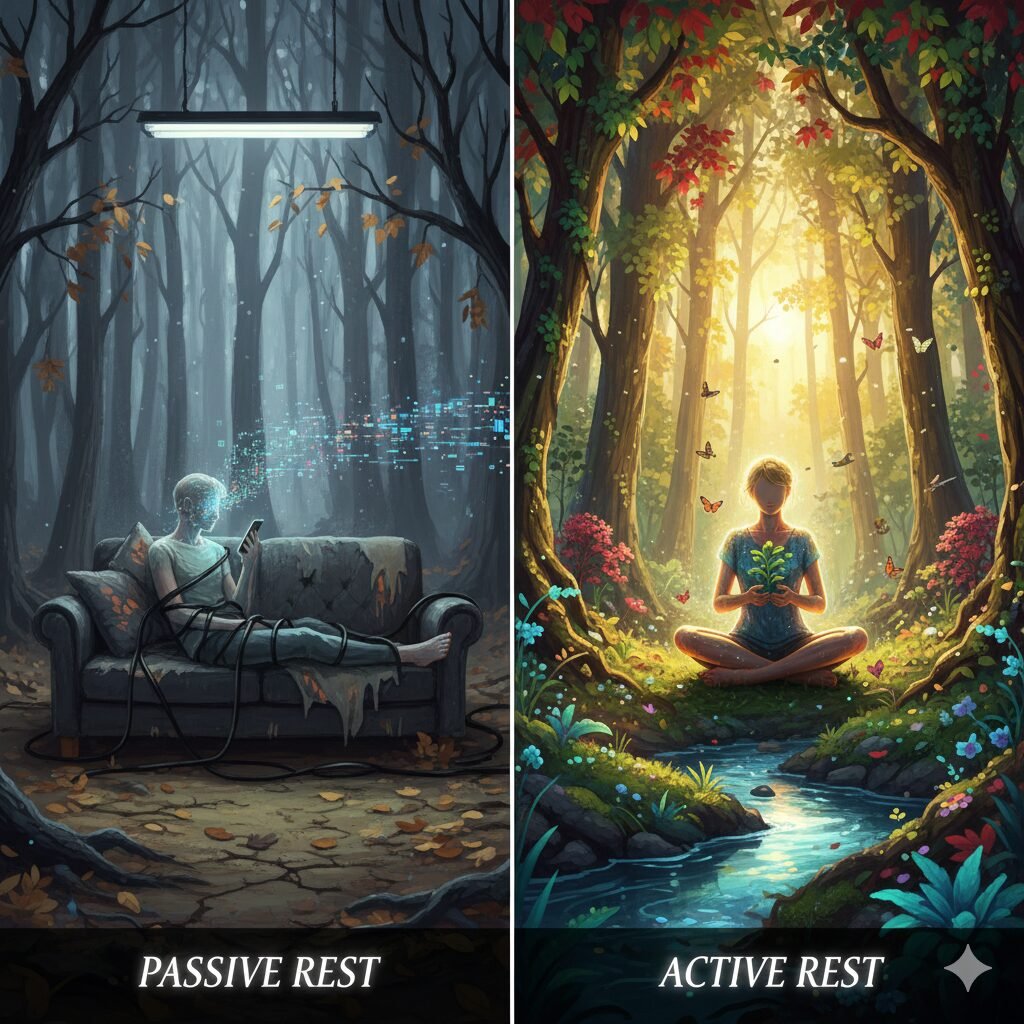
The common assumption is that rest equals absence of work—lying down, scrolling social media, or zoning out in front of the TV. While these activities temporarily distract us, they often fail to address the multi-dimensional fatigue many of us carry. True restoration requires a more intentional, holistic approach: Active Rest. This article explores why passive rest often falls short and introduces seven types of rest that renew energy and calm the nervous system.
Why Passive Rest Fails to Recharge You
Passive rest such as sleep is essential for physiological repair, but it doesn’t automatically heal mental, emotional, or creative depletion. When your mind keeps sprinting while your body is stationary, you won’t feel restored.
For example, mindless phone scrolling overloads your senses and decision-making centers. This is sensory exhaustion, not rest. If you want concrete tactics for stepping away from digital noise, read our practical guide Digital Detox: Reclaiming Your Calm, which walks you through real steps to reclaim silence.
The Seven Essential Types of Rest
1. Physical Rest
Passive Physical Rest: Sleep, naps, and lying down — important for cellular repair.
Active Physical Rest: Low-intensity movement such as restorative yoga or gentle stretching. If you’re building a calming corner at home, our piece From House to Haven: 7 Simple Steps to Create a Home Sanctuary for Your Soul offers design tips that support daily restorative practice.
2. Mental Rest
If your mind is busy with to-dos and decisions, mental rest is essential.
Active Mental Rest: Schedule micro-breaks during your day: a five-minute outdoor walk, watering a plant, or a journaling sprint. For motivation and a simple habit to try, see The Comprehensive Benefits of a 5-Minute Journaling Habit.
3. Emotional Rest
Managing emotions—yours and others’—drains energy. Emotional rest allows you to be honest about how you feel.
Active Emotional Rest: Practice boundary-setting and process feelings with a trusted person or therapist. If you find saying “no” hard, this guide The Gentle No explains how to protect your peace kindly.
4. Social Rest
Social interactions can either replenish or deplete. Choose conversations and gatherings that feel restorative rather than performative.
When you’re low on social energy, a mindful short walk with a close friend can reset — read about the power of moving meditation in The 10-Minute Miracle: Transform Your Mind with a Daily Mindful Walk.
5. Sensory Rest
Screens, loud environments, and constant alerts exhaust the senses.
Active Sensory Rest: Schedule tech-free windows, dim lights, or nature time. For practical steps and a plan, revisit Digital Detox.
6. Creative Rest
Creative work can drain your imaginative reserves. Replenish them by enjoying art or low-pressure hobbies.
Simple acts—browsing a gallery, trying a new recipe, or stepping outside to notice form and color—help. For an approach to decision clarity that supports creativity, see Beyond Burnout: How to Beat Decision Fatigue and Reclaim Your Mental Energy.
7. Spiritual Rest
Spiritual rest is feeling connected to purpose and something larger than yourself.
Active Spiritual Rest: Practices like meditation, prayer, reflective walks, or volunteering. Building morning and evening rituals can anchor you—learn practical routines in Your Day is Won or Lost in the First and Last Hour.
Recommended Tools for Effective Active Rest
These tools support different forms of Active Rest: physical, mental, sensory, creative, and spiritual.
Bean Products Meditation Cushion Mat Set
Organic zafu cushion + zabuton — ideal for comfortable seated practice.
Buy
Making Active Rest a Lifestyle
The key to overcoming chronic fatigue is to treat Active Rest as a necessary investment in your energy. It reduces tension and helps you respond to stress more resiliently. For brief daily resets and grounding, consider simple practices like grounding/earthing — see The Forgotten Habit: How 15 Minutes of “Earthing” Can Reduce Inflammation and Calm Your Mind.
- Identify Your Deficit: Which of the seven types of rest are you missing?
- Schedule It: Book short, intentional rest activities with the same priority as meetings.
- Embrace the Discomfort: Expect boredom or restlessness at first—presence is a skill that improves with practice.
Conclusion: Reclaiming Your Energy
If you feel tired after resting, your body and mind may be asking for more than sleep. By diversifying your rest across physical, mental, emotional, social, sensory, creative, and spiritual areas, you can move from chronic exhaustion to steady vitality. For deeper reading on topics touched in this article, see the short list below.
Call to Action: Know someone who sleeps enough but is still tired? Share this article and help spread the idea of Active Rest.
References
[1] American Psychological Association. (2025, May 6). Seven types of rest to help restore your body’s energy.
[2] Dalton-Smith, S. (2017). Sacred Rest: Recover Your Life, Renew Your Energy, Restore Your Sanity. FaithWords.