
From House to Haven: 7 Simple Steps to Create a Home Sanctuary for Your Soul
A calm, practical guide to turning your home into a sanctuary for mental, emotional, and spiritual well-being.
Transform your space with intention — sacred decluttering, sensory anchoring, nature, ritual, and gentle maintenance.
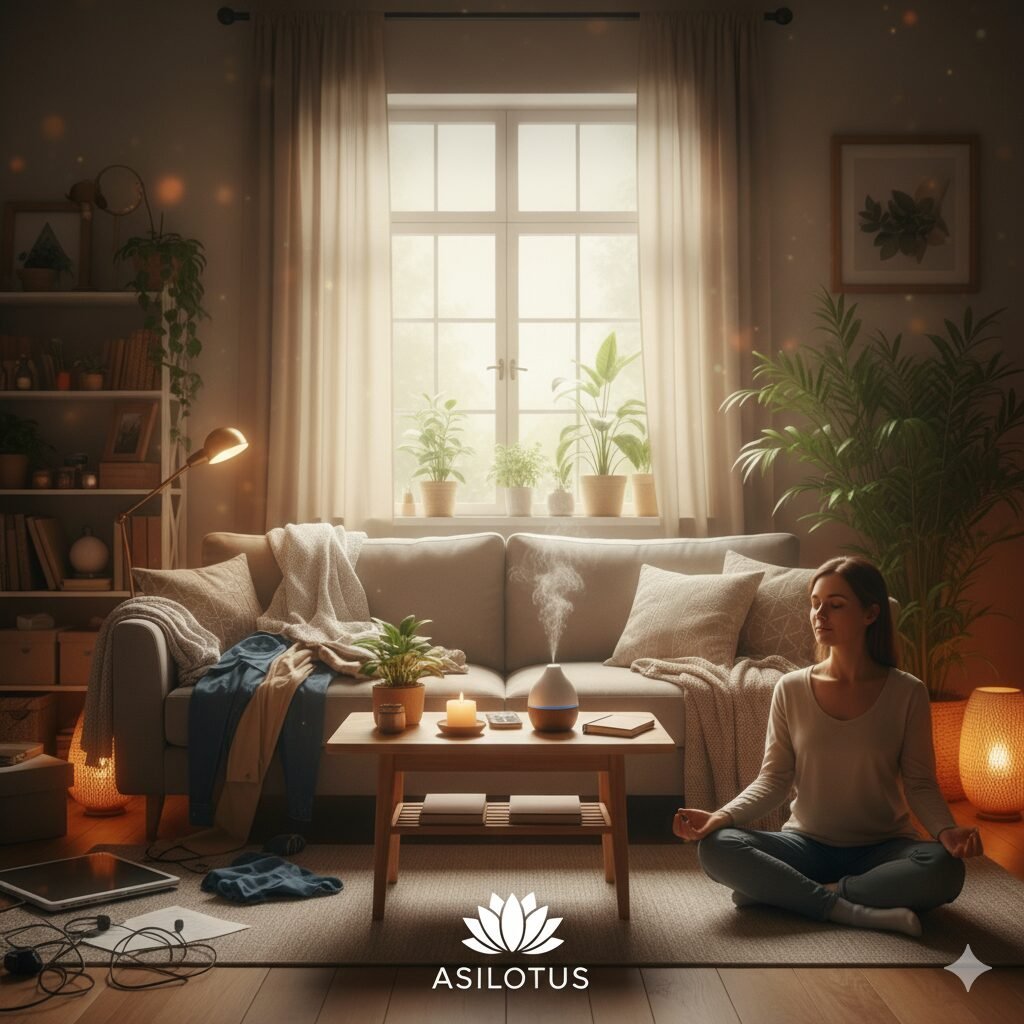
Introduction: The Deep Need for a Home Sanctuary
In a world that constantly demands our attention, our energy, and our peace, where do you go to simply be? For many, the answer should be home. Yet, for too many of us, our living spaces have become extensions of the chaos outside—cluttered, noisy, and draining. We yearn for a place of refuge, a personal retreat where we can shed the day’s stress and reconnect with our deepest selves. This yearning is not a luxury; it is a fundamental human need for safety, comfort, and soul nourishment.
The concept of a Home Sanctuary goes far beyond interior design. It is a holistic approach to living that transforms your physical space into a powerful tool for mental, emotional, and spiritual well-being. It’s about creating an environment that actively supports your healing, creativity, and inner peace. If you are ready to turn your house from a mere dwelling into a haven for your soul, this comprehensive guide will show you the seven simple, yet profound, steps to make that transformation a reality.
Phase 1: The Sacred Decluttering (Body & Space)
The first step in creating a Home Sanctuary is to address the physical environment, but with a spiritual intention. Clutter is not just misplaced objects; it is stagnant energy and a constant visual reminder of unfinished tasks. Research has shown a direct link between a cluttered home and increased levels of the stress hormone cortisol. When your environment is chaotic, your mind struggles to find calm.
Beyond Tidy: Decluttering for the Mind
Sacred Decluttering is a process of mindful release. Instead of asking, “Do I use this?”, ask, “Does this item serve my highest self or bring me joy?” If the answer is no, release it with gratitude for its past purpose.
- Start Small: Choose one area—a drawer, a shelf, a corner—and complete it entirely. This builds momentum and gives you an immediate sense of accomplishment.
- Digital Detox: Your physical space is only half the battle. Declutter your digital life: unsubscribe from draining emails, organize your desktop, and limit notifications. A peaceful home requires a peaceful mind, and a peaceful mind requires digital boundaries.
- The One-In, One-Out Rule: To maintain your Home Sanctuary, adopt a simple rule: for every new item that enters your home, one similar item must leave. This prevents the slow creep of clutter from returning.
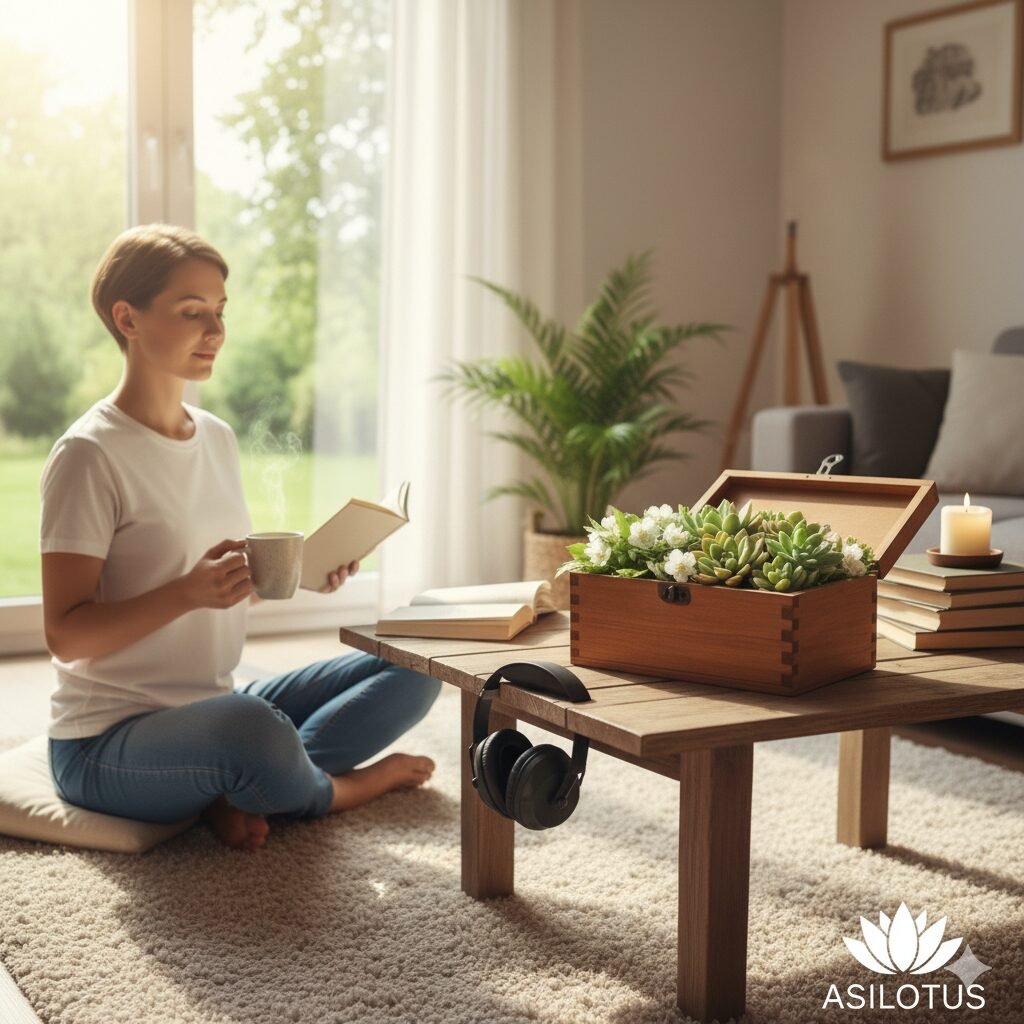
Phase 2: Sensory Anchoring (Body & Spirit)
Our homes speak to us through our senses. To create a true Home Sanctuary, we must intentionally curate these sensory inputs to soothe the nervous system and elevate our mood. This is where the power of aromatherapy, sound, and texture comes into play.
Curating the Atmosphere with Scent and Sound
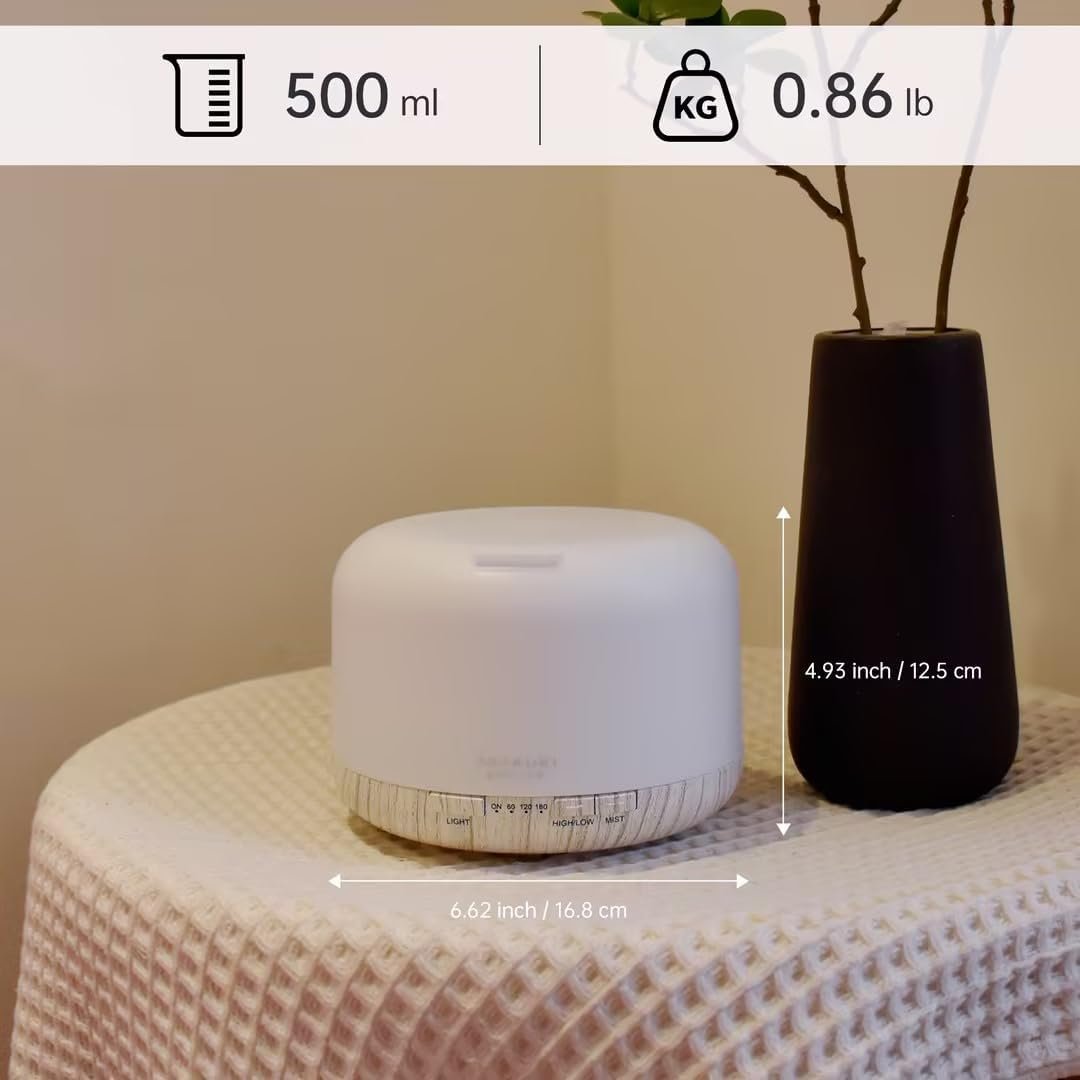
Scent is the most direct link to memory and emotion. Using essential oils can instantly shift the energy of a room. Lavender promotes relaxation, citrus oils boost energy and focus, and frankincense can deepen meditation.
Recommended Tool for Sensory Anchoring: Vitruvi Stone Diffuser — a whisper-quiet ultrasonic diffuser that helps create a calm aroma field.
Sound should be a conscious choice. Silence is golden, but intentional sound is transformative. Consider incorporating:
- Nature Sounds: Water features or recordings of rain and forests.
- Binaural Beats or Solfeggio Frequencies: Music designed to promote specific brainwave states (e.g., theta for deep relaxation).
- Wind Chimes: Placed outside to bring gentle, natural music into your space.
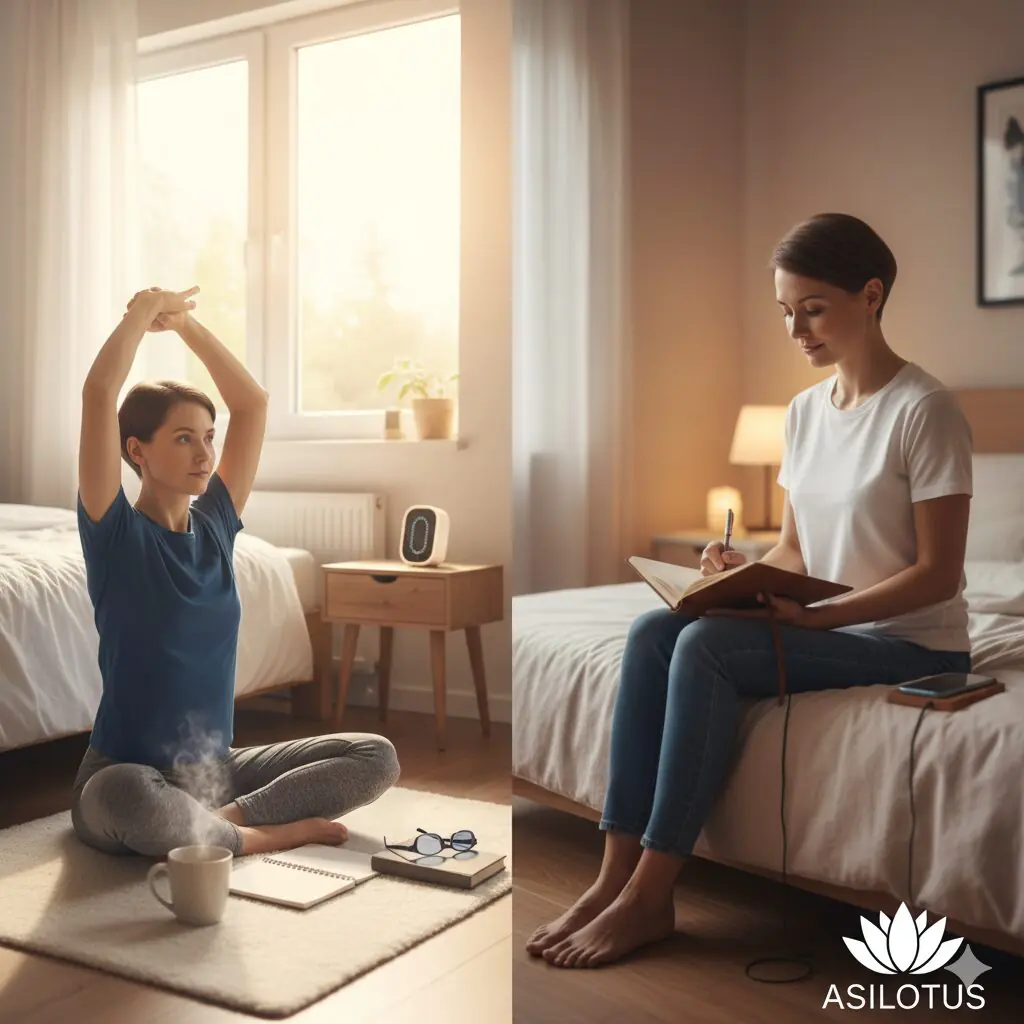
Phase 3: Infusing Nature (Body & Soul)
Humans have an innate, biological need to connect with nature, a concept known as biophilia. Bringing the outside in is a powerful way to transform your house into a Home Sanctuary that supports your vitality.
The Healing Power of Greenery and Light
Plants are living, breathing air purifiers and mood boosters. Studies, including those by NASA, have shown that certain houseplants can filter common indoor air pollutants, contributing to a healthier environment.
- Low-Maintenance Choices: Snake plants, Pothos, and ZZ plants are excellent for beginners and thrive in various light conditions.
- The View: Position your furniture to maximize your view of nature, whether it’s a window overlooking a garden or even a carefully placed nature photograph.
- Natural Light: Maximize natural light exposure. Open curtains, clean windows, and use sheer fabrics to diffuse light gently. Natural light regulates your circadian rhythm, which is crucial for sleep and overall holistic wellness.

Phase 4: Defining a Sacred Space (Soul & Spirit)
Every Home Sanctuary needs a heart—a dedicated area for introspection, practice, and spiritual connection. This doesn’t require an entire room; a corner, a closet, or even a small table can suffice. The key is intention.
Creating Your Personal Altar or Meditation Nook
This space should be reserved only for activities that nourish your soul, such as meditation, journaling, prayer, or quiet contemplation.
- Elements of an Altar: Include items that hold personal meaning: candles, crystals, photos of loved ones or mentors, natural objects (stones, shells), or a journal.
- Comfort and Focus: Ensure the space is comfortable. A dedicated cushion, a soft rug, and minimal distractions are vital.
- Ritual Tools: For those who practice sound healing or deep meditation, tools like singing bowls can be incredibly effective in setting the tone for your practice. Tibetan Singing Bowl Set is recommended for its pure tone and ease of use.

Phase 5: The Psychology of Color and Light (Mind)
The colors and lighting in your home have a profound, subconscious impact on your mood, energy levels, and cognitive function. A true Home Sanctuary uses these elements intentionally to create the desired emotional landscape.
Painting Your Mood: Color Theory for Calm
- Calming Colors: Soft blues, greens, and neutrals (creams, light grays) are known to promote relaxation and reduce anxiety. Use these in bedrooms and main living areas.
- Energizing Accents: Reserve warmer, more vibrant colors (yellows, oranges) for spaces where you need focus or creativity, like a home office or kitchen.
- Layered Lighting: Avoid harsh, overhead lighting. Use multiple sources—floor lamps, table lamps, and dimmers—to create layers of soft, warm light. Warm-toned bulbs (2700K) mimic candlelight and promote relaxation in the evening, signaling to your body that it’s time to wind down.
Phase 6: Establishing Boundaries (Mind & Relationships)
A Home Sanctuary is not just about what you put in; it’s about what you keep out. Establishing clear boundaries is crucial for protecting the peace and energy of your space from external pressures.
Protecting Your Peace: Digital and Social Boundaries
- The Digital Sunset: Implement a “digital sunset” rule. At a specific time each evening (e.g., 7:00 PM), all non-essential screens (TVs, tablets, phones) are put away or silenced. This allows your mind to transition from the active, outward-focused state to a restful, inward-focused state.
- Social Boundaries: Be mindful of the energy you invite into your Home Sanctuary. If certain visitors consistently bring stress or negativity, it is your right and responsibility to limit those interactions or meet them in a neutral space. Your home is your energetic filter.
- Work-Life Separation: If you work from home, create a clear physical and energetic separation between your workspace and your living space. When you “leave” your office (even if it’s just a desk in the corner), perform a small ritual—close the door, cover the computer, or light a candle—to signal the end of the workday.
Phase 7: The Ritual of Maintenance (Soul & Body)
Creating a Home Sanctuary is not a one-time project; it is a continuous practice. The final step involves establishing simple, regular rituals to maintain the high-vibrational energy of your space.
Daily Practices for Energetic Flow
- Daily Tidy-Up: Spend 10-15 minutes each day putting things back in their place. This prevents the build-up of clutter and keeps the energy flowing.
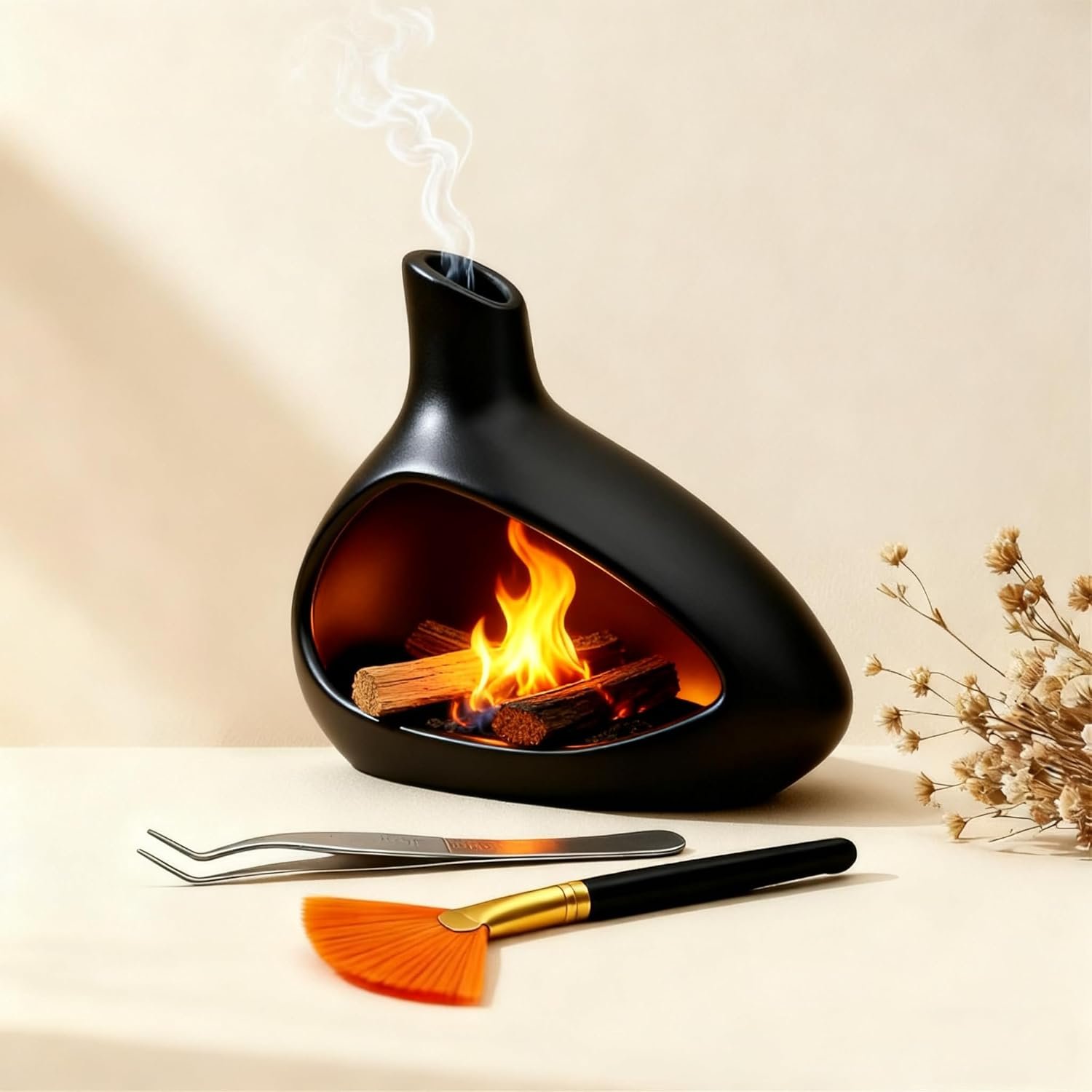
- Energetic Cleansing: Periodically cleanse the energy of your home. This can be done with sound (clapping, singing bowls), smoke (sage, palo santo), or simply by opening all the windows to let in fresh air and sunlight.
- Gratitude Practice: End your day by walking through your Home Sanctuary and silently expressing gratitude for the comfort, safety, and peace it provides. This simple ritual anchors positive energy in your space and in your heart.
Recommended Articles
References
- Saxbe, D. E., & Repetti, R. L. (2010). No place like home: Home tours correlate with daily patterns of mood and cortisol. Personality and Social Psychology Bulletin, 36(1), 71-81.
- Wolverton, B. C., Johnson, A., & Bounds, K. (1989). Interior landscape plants for indoor air pollution abatement. NASA Technical Memorandum.
- The role of daily rituals in reducing stress and improving mental well-being (general literature).
Feeling Tired After Resting? You Might Need “Active Rest” Instead of the Couch
Feeling Tired After Resting? You Might Need “Active Rest” Instead of the Couch Feeling Tired…

The Forgotten Habit: How 15 Minutes of “Earthing” Can Reduce Inflammation and Calm Your Mind
The Forgotten Habit: How 15 Minutes of “Earthing” Can Reduce Inflammation and Calm Your Mind…
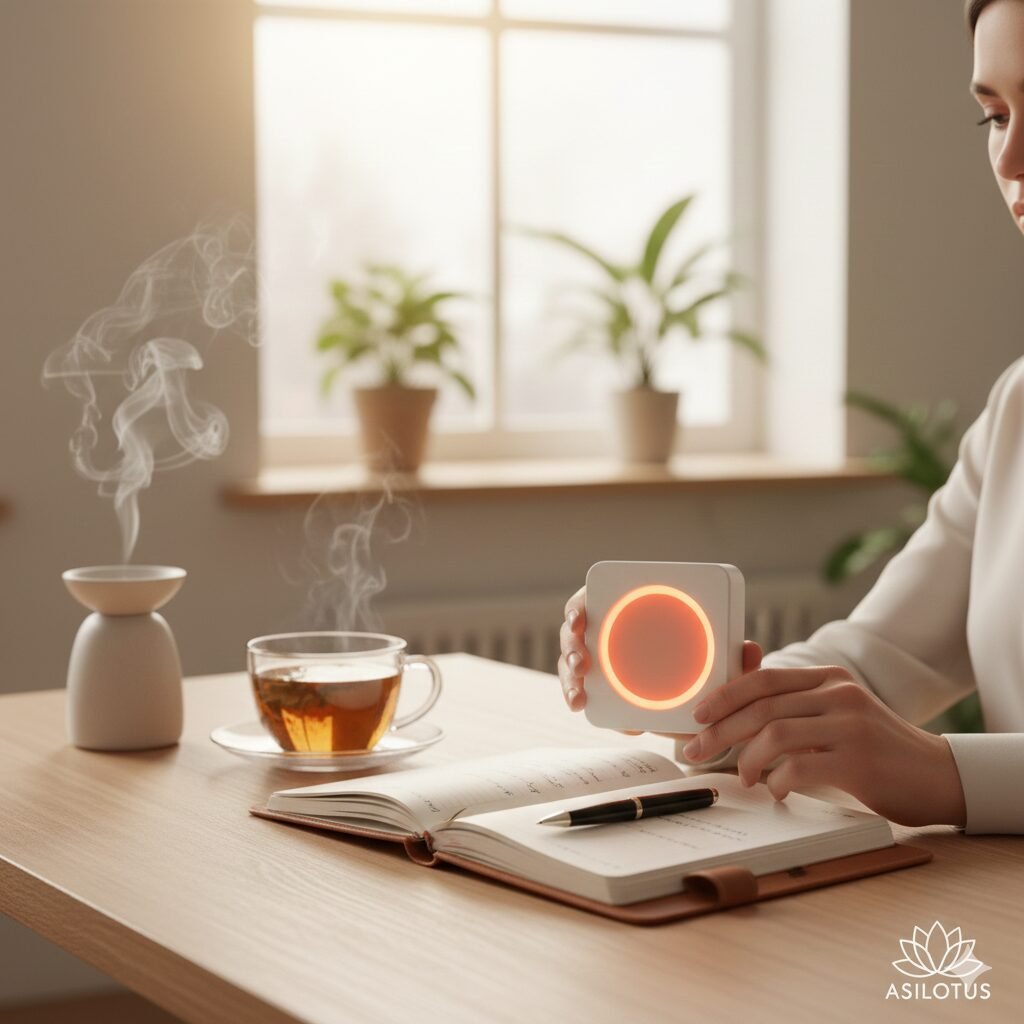
Stuck in Overthinking? A Simple 3-Step Formula to Escape Analysis Paralysis
Stuck in Overthinking? A Simple 3-Step Formula to Escape Analysis Paralysis By AsiLotus We live…
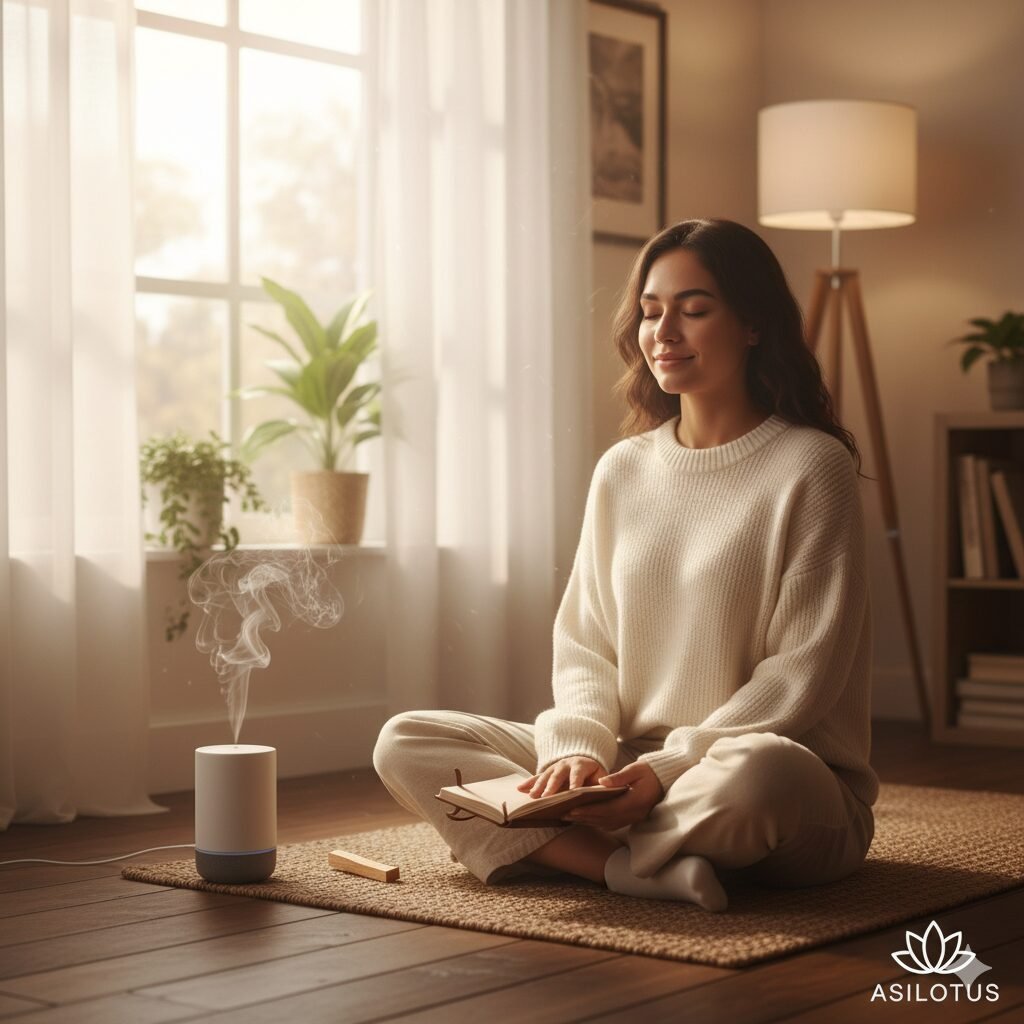
Protect Your Peace: Master The Gentle No and Set Boundaries Without
The Gentle No: How to Set Boundaries and Protect Your Peace Without Guilt By AsiLotus…

Is Your Gut Controlling Your Mood? The Secret to a Happier Mind Might Be in Your Stomach l’Gut-Brain Axis
Is Your Gut Controlling Your Mood? — AsiLotus AsiLotus Nov 2025 · 8 min read…
From House to Haven: 7 Simple Steps to Create a Home Sanctuary for Your Soul
From House to Haven: 7 Simple Steps to Create a Home Sanctuary for Your Soul…